Dinoflagellate:
Tuesday, February 12, 2013
Monday 2/11
HAB is a Harmful Algae Bloom that cell's multiply and produce harmful toxins which can harm many different marine animals or humans. The causes of this can be anything from warm water temperatures that form phytoplankton such as Dinoflagellates Man can prevent this if we work to protect the environment, clean up our oceans and stop spilling oil or waste into the ocean. In the Gulf of Mexico, major Harmful Algae Booms were produced because of the excessive amount of oil that spilled. It has affected the gulf coast by poisoning many different animal species and therefore affecting us because the fishing industries around there had to postpone selling their seafood.
Dinoflagellate:

Dinoflagellate:

Sunday, February 10, 2013
Friday 2/8 Plankton
Plankton is very important to the marine life and to our own. They are a very important to different marine animals providing 200 billion metric tons of food per year. These creatures are also responsible for half of the earths photosynthesis absorbing 200 million tons of carbon dioxide. This process is vital to producing oxygen, maintaining the worlds temperature, and for the ocean's ability to handle climate change.
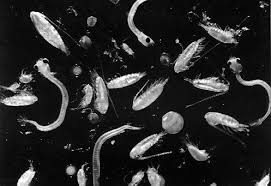
Diatoms and Dinoflagellates Differences:
Diatoms are the most abundant type of photosynthesis organism in the ocean while Dinoflagellates are second. Diatoms also are survive off the suns energy and is responsible for most of the earths oxygen while Dinoflagellates trap their food and sometimes use extendable tubes that suck out the insides of other cells. Also, Dinoflagellates are responsible for some harmful effects of marine and human life producing toxins that make the animals sick, then make humans sick when they eat their seafood.
Saturday, February 9, 2013
Thursday 2/7
The Moon Jellyfish
It's mainly called Aurelia Aurita, its other names are the common jellyfish or saucer jelly.
Adaptations: The body of the Moon Jelly adapted to absorb water oxygen by diffusion through it's skin because like other jelly fish it does not have a respiratory system with gills or lungs.
Endangered: No
Interesting Facts: The Moon Jelly fish is normally translucent white but can change colors to pink, purple or orange depending on their last meal. It also has hair-like tentacles containing stinging cells to get food and protect itself. They are also too small to bother most humans.
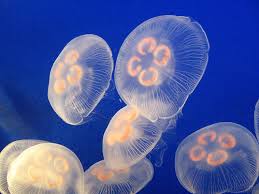 Why did you choose this organism: I've never heard of a Moon Jellyfish and I think their small round shape is interesting.
It's mainly called Aurelia Aurita, its other names are the common jellyfish or saucer jelly.
Adaptations: The body of the Moon Jelly adapted to absorb water oxygen by diffusion through it's skin because like other jelly fish it does not have a respiratory system with gills or lungs.
Endangered: No
Interesting Facts: The Moon Jelly fish is normally translucent white but can change colors to pink, purple or orange depending on their last meal. It also has hair-like tentacles containing stinging cells to get food and protect itself. They are also too small to bother most humans.
Wednesday 2/9
I think the most important ship we've learned about in aquatic science is definitely the Meteor because it was the first ship to do ocean depth measurements using an electronic echo sounder. It also then studied the Mid-Atlantic Ridge using this new technology. Without this new discovery of technology, scientists wouldn't be able to improve on it in the future to make even better equipment to explore the ocean.


Tuesday, February 5, 2013
The Study of The Ocean- Jacques Cousteau

The history of oceanography has changed over time especially thanks to new minds and new technology. Maps, soundings, and measurements of the ocean started to be made and new diving equipment helped divers explore the ocean more thoroughly. One event that I think changed the study of Ocean significantly was Jacques Cousteau's creation of the breathing device called the Aqua-Lung in the 19th century. It was the first open circuit underwater breathing device that reached worldwide popularity and commercial success. He also created better equipment for filming underwater. So he and his crew could film parts of the ocean people have never seen before. This contributed greatly to the future because people soon perfected his Aqua-Lung and waterproof filming gear to learn more and study the ocean. Cousteau also created many different documentaries about the ocean life that led to the amazement and curiosity of many more oceanographers to follow him. Thanks to his new creation of equipment and ideas for studying the sea, we now have great advancements in underwater technology and SCUBA gear.
Monday's Blog- 5 Reasons to Study the Ocean
Five reasons for why it's important to study the ocean is (in my opinion):
 5. To understand plate tectonics and the continental drift.


1. To understand where our resources come from and to how to preserve them. Things like fish, oil, and the importance of the sea food chain.
2. Our future could soon rely on the ocean, it's not all the way explored and some possibly important minerals could be hiding below the ocean floor.
3. To understand how the ocean affects our weather and climate and how they change.
4. There are probably thousands of shipwrecks just waiting to be explored, so the ocean is like a big underwater museum waiting to be discovered.
 5. To understand plate tectonics and the continental drift.


Friday's Boat Race
In Aquatic Science we had to create boats and try to make it travel straightly. When we tested, the finished product of ours it worked great! Check out the video bellow, we made it around 2:30-2:50 seconds for the three times tested. Our boats name is "Blew By You"!(:
Subscribe to:
Posts (Atom)